Skin Cancer Awareness Month 2026
May 29, 2026
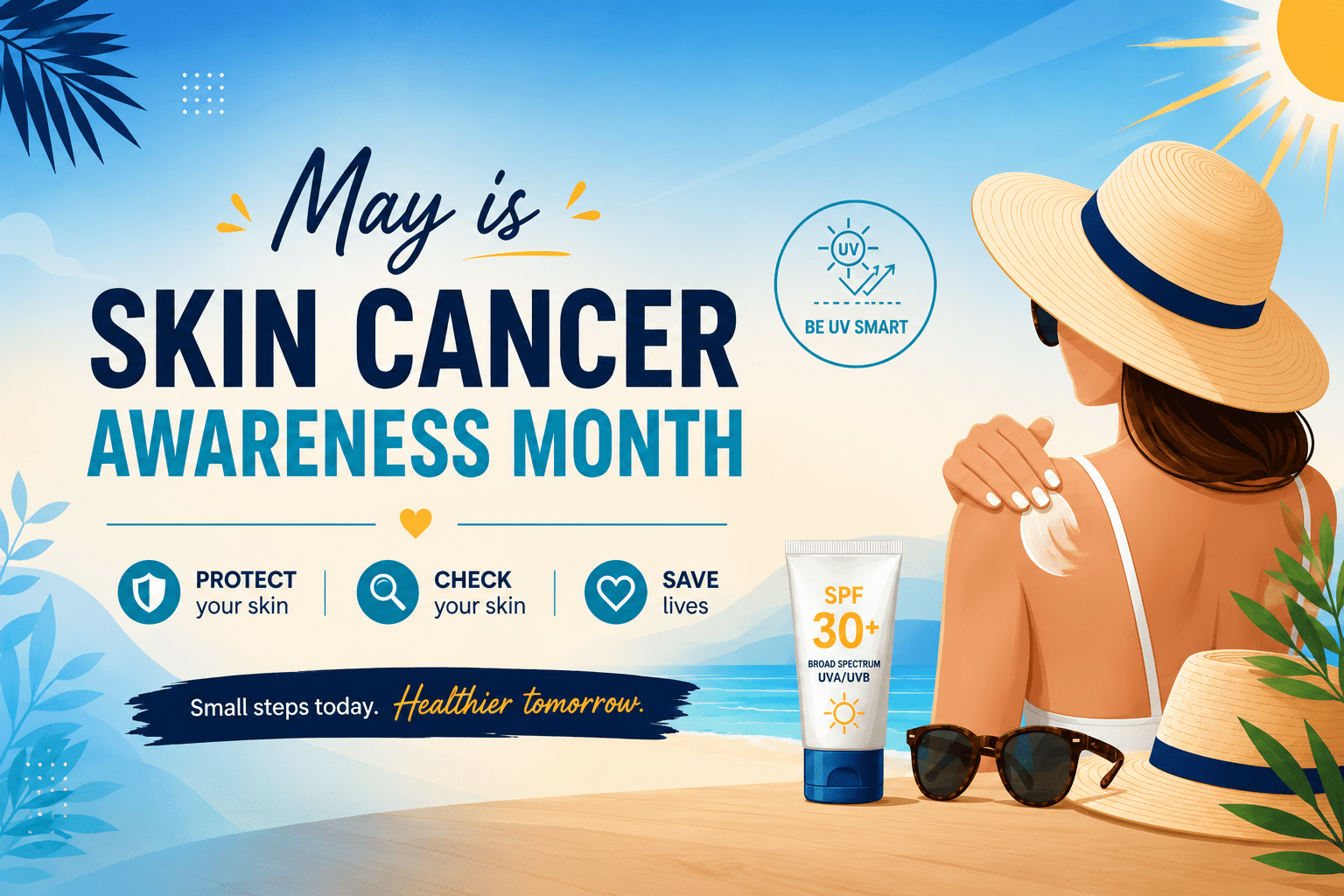
May is drawing to a close, along with the annual Skin Cancer Awareness campaign. However, preventive measures should be applied year-round!
Our medical writing team has contributed to many projects on skin cancers. We consider it important to highlight this topic, particularly in light of the rising incidence of these types of cancers despite the existence of simple and effective preventive measures.
Skin cancers: a plural reality and increasing healthcare burden
As we highlighted in one of our previous news articles, there are several types of skin cancer. Melanoma, although less common than carcinomas, remains the most aggressive form due to its high metastatic potential.
The incidences of melanoma, basal cell carcinoma, and squamous cell carcinoma have increased substantially over recent decades, especially in older and fair‑skinned populations. This increase has largely been attributed to excessive exposure to natural and artificial ultraviolet (UV) rays. Sunburn, which is too often trivialized, and repeated unprotected exposure can have serious long-term consequences.
Skin cancer prevention campaigns
Primary prevention: reducing the risk of disease onset
In this context, prevention campaigns play a key role. They serve as a reminder that most skin cancers could be prevented through appropriate behaviors, including:
- Seeking shade during peak sunlight hours
- Wearing protective clothing, including a hat and sunglasses
- Applying a broad-spectrum sunscreen with a high sun protection factor (SPF)
- Limiting intense sun exposure
- Avoiding the use of sunbeds.
These skin cancer prevention campaigns also aim to counter misinformation circulating online about tanning, UV rays, and sun protection. By promoting scientifically validated information, they help to change behavior and reduce long-term risks to public health.
For example, videos released for the Euromelanoma 2026 campaign address five widespread myths that may increase the risk of developing skin cancer:
1. Having a base tan stops you getting sunburn ❌
2. Sunscreen gives you cancer ❌
3. Exposure to UV rays is healthy ❌
4. Sunbeds should be used before holidays ❌
5. Wearing sunglasses increases risk of sunburn ❌
More myths and prevention tips from the 2026 campaign, entitled “🚫 STOP THE BULLS**T: Skin Cancer Myths Debunked”, are available on the Euromelanoma International LinkedIn page.
Secondary prevention: early detection improves outcomes
In addition to primary prevention, regular self-examinations to monitor the skin, dermatologist consultations, and further evaluations in the event of suspicious lesions are key strategies enabling the early detection of skin cancers, which increases the chance of recovery. Indeed, early detection is a key factor in improving the prognosis of skin cancers. Further guidance on identifying suspicious lesions is available in resources from a previous awareness campaign: Euromelanoma: 2023 Campaign.
Santé Active Edition – Synergy Pharm and skin cancer expertise
The Santé Active Edition – Synergy Pharm team has extensive experience in writing and coordinating scientific publications in the field of skin cancer, including prevention, screening, and therapeutic approaches. Several original articles and literature reviews drafted by our medical and scientific editorial team have been published in leading international journals in the field of dermatology, such as the American Journal of Clinical Dermatology and the Journal of the European Academy of Dermatology and Venereology (JEADV).
Illustration by artificial intelligence