News - Page 7
MedComms Day
June 9, 2021
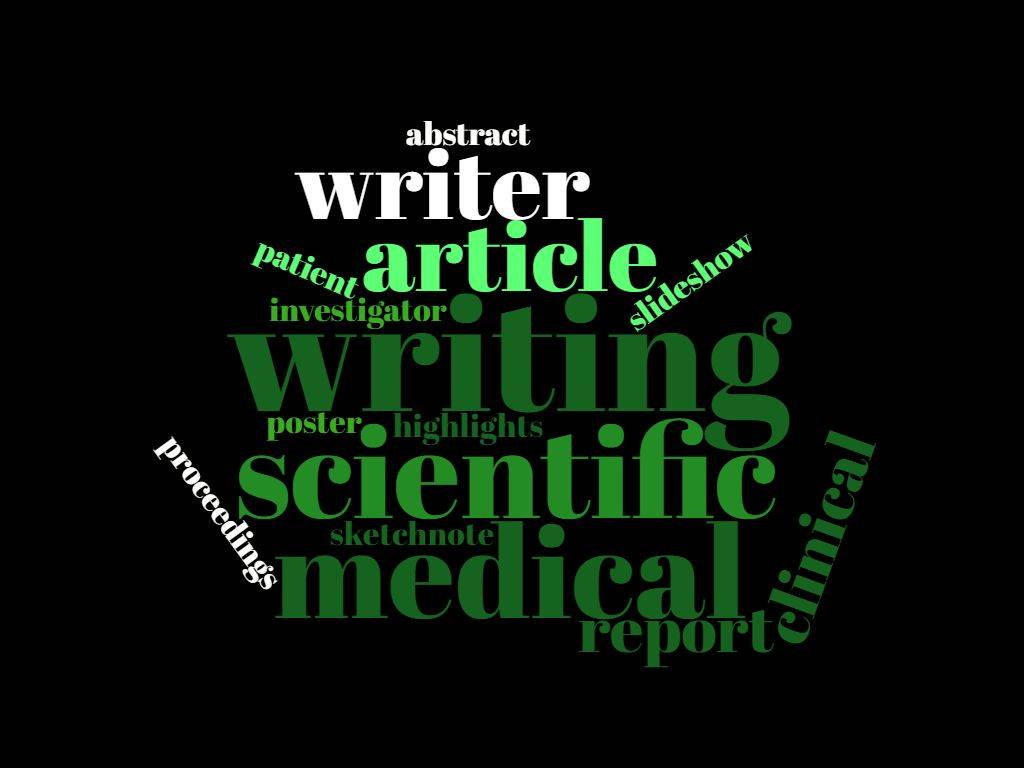
Today is MedComms Day! We would like to take this opportunity to tell you about our core business activity: medical and scientific writing.
Our medical communication agency has been serving the pharmaceutical and cosmetics industries, biotech companies, manufacturers of medical devices, healthcare professionals, and the wider scientific research community for more than 30 years. How? Medical communication, and particularly the writing of regulatory and clinical documentation related to the development of drugs and other healthcare products, is an integral part of these sectors.
Many documents are needed during the development and “lifespan” of a drug, from the pre-clinical research phase to marketing and beyond. Regulatory medical writing helps industry meet this demand.
- Setting up a clinical study requires the submission of a Clinical Trial Authorization (CTA) application to the health regulatory authorities. Many documents need to be written for this application: an Investigational Medicine Product Dossier (IMPD), an investigator’s brochure, a synopsis and a clinical trial protocol, an informed consent form (ICF), etc. In addition, a Clinical Study Report (CSR) needs to be written after each trial phase to communicate the results to the regulatory authorities, and a lay summary must also be published in the European database of clinical studies.
- Preparing a drug Marketing Authorization Application (MAA) also requires specific skills, involving the writing of a Common Technical Document (CTD, clinical and nonclinical), and a Pediatric Investigation Plan (PIP), if applicable. After submitting the MAA dossier, national (e.g., the French Agency for the Safety of Medicines and Health Products, ANSM) or international (European Medicines Agency [EMA], Food Drug Administration [FDA]) health agencies usually require detailed responses to answer specific questions about the drug being assessed.
- Pharmacovigilance documents (e.g., Periodic Safety Update Reports [PSURs], Development Safety Update Reports [DSURs] are also essential documents that need to be written at various points during the “lifespan” of a drug.
Publishing the results of experimental, nonclinical, and clinical studies in peer-reviewed journals is essential for enabling researchers to share their findings with the scientific community, and thus move science forward. Scientific article writing is the first step in this process. The scientific paper is then submitted for peer review. As scientific writing is subject to specific rules and the selection criteria of peer-reviewed journals are very strict, many authors also hire a medical writer to proofread or rewrite their scientific paper before submission to increase the chance of their article being accepted for publication in their target journal. In some cases, authors feel uncomfortable writing in English and use our medical article translation or language editing services before submission of their article to an international journal.
Medical communication is also required for conferences and meetings: an abstract of the study must be submitted, and then a poster or a slide show have to be created to present the results. For after the event, some companies or associations ask us to produce a conference report intended for participants who were unable to attend. Conference reports can be produced in several formats, e.g., as conference proceedings, scientific articles, or summary slideshows. Medical writers can also write, create, and produce all these documents!
The general public also have a need for a range of documents intended for them, such as the lay summaries of clinical trials mentioned above, website content dedicated to patients, medical brochures, leaflets, scientific sketchnotes (a of mix short texts and drawings), etc.
Our team is passionate about scientific and medical writing: our profession is diverse and enriching with many various missions on many various themes!
World No Tobacco Day
May 31, 2021
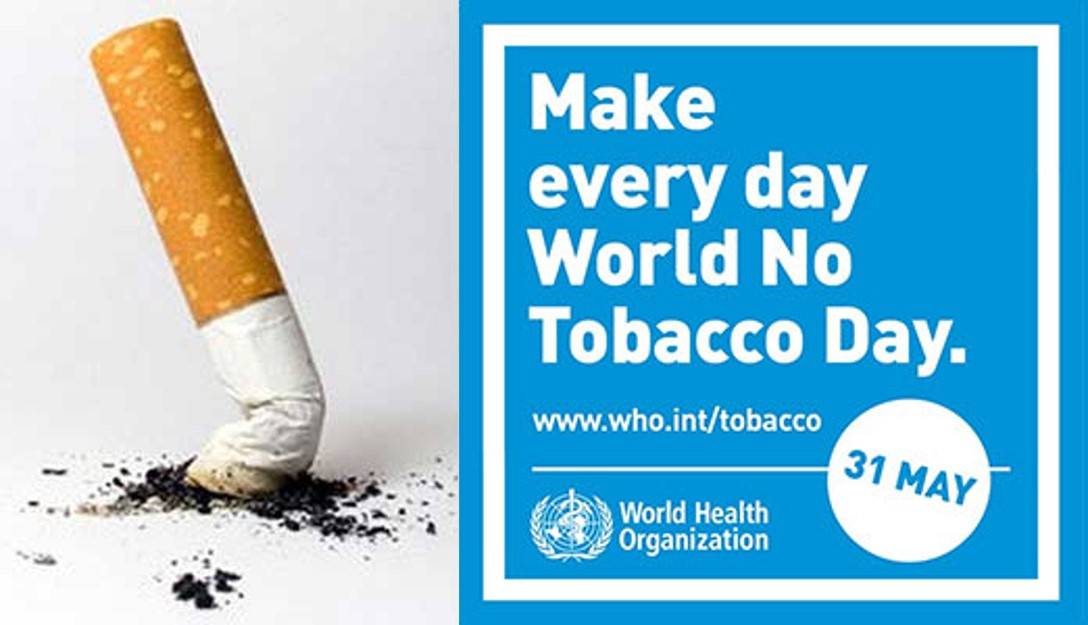
Did you know that tobacco is the main risk factor for bladder cancer?
In 75% of cases, bladder cancer is non-invasive but 5-year progression (0.8% – 45%) and recurrence (31% – 78%) rates are high. Patients with this type of cancer must therefore undergo regular examinations to enable early treatment.
Several urinary tests have been developed to overcome the drawbacks of reference examination methods; in particular the invasive nature of cystoscopy, and the problems of sensitivity and of intra- and inter-observer reproducibility associated with cytology.
The results of a recent study support the use of the Xpert Bladder Cancer Monitor test developed by Cepheid for the monitoring of these patients in clinical practice. We would like to thank Géraldine Cancel-Tassin, Morgan Rouprêt, Ugo Pinar, Cécile Gaffory, Félicien Vanié, Valérie Ondet, Eva Compérat, Olivier Cussenot, Myriam Livrozet, and Laura Fabre for entrusting our medical writing team with writing and English editing of this article!
Fight against Malaria
April 27, 2021
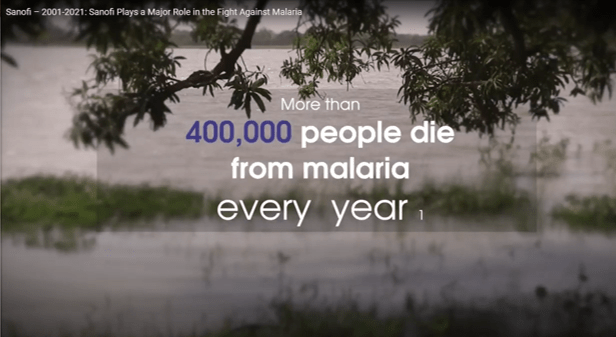
Malaria is caused by Plasmodium parasites. Among the 5 disease-causing parasite species, Plasmodium (P.) falciparum and P. vivax are the most widespread. They are transmitted to people through the bites of infected female Anopheles mosquitoes.
According to the World Health Organization (WHO), nearly half of the world’s population was at risk of malaria in 2019. P. falciparum parasites are responsible for most malaria cases in the WHO African region, whereas P. vivax parasites are responsible for most cases in the WHO Region of the Americas.
Over the past 70 years, Sanofi has produced several antimalarial drugs against P. falciparum and P. vivax parasites. In addition, Sanofi has developed a malaria awareness program for school-age children: children may suffer from malaria-induced anemia, a condition which has an impact on their school attendance and cognitive development. These educational tools teach children how to identify and clear the mosquito proliferation sites in their environment. Children can also learn about the clinical symptoms of malaria and the actions to take in case of illness. Education is a key fator in helping to change the health behaviors of these adults of tomorrow, and consequently those of future generations.
Synergy Pharm is proud of providing Sanofi with medical writing support over several years for their various malaria projects, including regulatory and clinical documentation, Common Technical Documents (CTDs) for Marketing Authorization Applications (MAAs), and scientific articles.
Medical articles, preprints, and peer review
April 15, 2021
This joint position statement from the AMWA-EMWA-ISMPP, a multi-party consortium of three eminent professional organizations for medical communication professionals, including medical writers advises against the use of preprints and post-publication peer review articles as references in any medical publication unless they are cited as a personal communication (i.e., as an in-text reference).
This statement serves as a reminder that by adhering to the guidelines set out by these organizations professional medical writers enhance publication quality and speed.
More than 150 articles written by Santé Active Edition – Synergy Pharm have been published in major international journals.
Updated PRISMA guidelines
March 30, 2021
The PRISMA 2020 statement has just been published!
This new statement provides an update to the PRISMA 2009 guidelines for reporting systematic reviews and meta-analyses.
You can download the new checklist template and the new flow diagram templates at http://www.prisma-statement.org/.
Every medical writer at Santé Active Édition – Synergy Pharm pays particular attention to keeping informed of new medical writing recommendations, including those concerning medical and scientific article writing.
Our Contributions to Publications on Memory
March 15, 2021
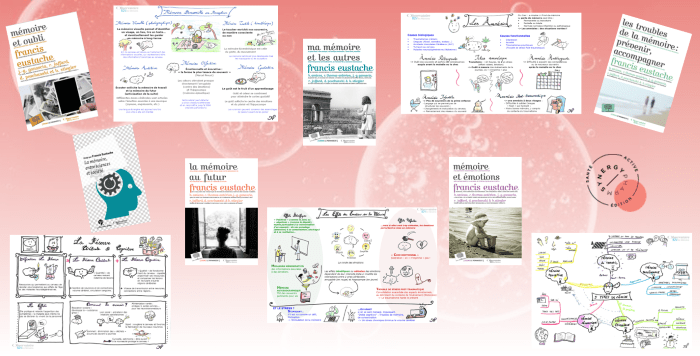
On the occasion of Brain Awareness Week (BAW), (re) discover the French sketchnotes and multidisciplinary books on this theme, produced by Françoise Nourrit-Poirette, a medical writer from our team, for the “Observatoire B2V des Mémoires” (B2V Memory Observatory).
Brain Awareness Week 2021
March 11, 2021
Next week (15th-21st of March) is the 23rd Brain Awareness Week (BAW), a global campaign to highlight advances in brain research. There are many events taking place online across Europe, including in France organized by the “Société des Neurosciences”, and in the UK and Ireland by the British Neuroscience Association.
March is Colorectal Cancer Awareness Month
March 1, 2021
About 450,000 people are newly diagnosed with colorectal cancer each year in Europe, and around 140,000 people died from the disease across the EU-27 in 2016. In France, more than 43,000 new colorectal cancer cases and more than 17,000 deaths are estimated to occur each year. Screening enables colorectal cancer to be uncovered at an early stage, and the earlier it is detected, the greater the chances of recovery (the 5-year survival rate is 90% for the early stages).
Women and men aged 50 to 74 are invited every 2 years to have a rapid and effective test at home as part of the French colorectal cancer screening program. Find out more about screening programs in your country at https://digestivecancers.eu/colorectal-cancer/
World Rare Disease Day
February 28, 2021
Today is World Rare Disease Day and we would like to acknowledge the recent therapeutic advances that have brought hope to many patients and their families. Thank you to all who work in this field! Our team has a special interest in rare diseases; stemming both from the experience of two medical writers from our medical communication agency (Emma Pilling and Françoise Nourrit-Poirette) at Orphanet, and from our coverage of the North American Cystic Fibrosis Conference (NACFC). Marielle Romet, who is based in the United States, has attended the NACFC 4 years in a row and our team has coordinated the production of conference reports that were published live by the Pediatric Archives in partnership with the French Cystic Fibrosis Society, Elsevier and Vertex, and with the help of Profs. Isabelle Sermet, Isabelle Fajac, and Philippe Reix, and Drs. Valérie Urbach and Nadine Desmazes-Dufeu, and a group of French pulmonologists.
https://nacfc.elsevierresource.com/les-archives-des-congres-nacfc
Anosmia Awareness Day

February 27, 2021
Today is World Anosmia Awareness Day. Until recently, anosmia was a term understood mainly by patients, physicians and researchers; however, this term has now become familiar to the general public because anosmia is one of the common symptoms of Covid-19, particularly of the mild form of the disease (Lechien et al. 2021). Anosmia involves not only loss of the ability to detect odors, but also loss of the ability to sense food aromas and perceive flavors; the sense of taste only allowing the detection of sweet, savory, sour, bitter and salty food. Loss of smell is very disturbing: it means loosing the everyday markers that are closely linked to odors and aromas. Although loss of smell is a short-term symptom for most Covid 19 patients, anosmia has been reported to persist for at least 6 months in patients with long Covid-19 (Lechien et al. 2021). Olfactory training is currently the only effective therapy for the treatment post-viral anosmia (French National Authority for Health, 2021), but oral corticosteroids may improve recovery of the sense of smell in Covid-19 patients (Le Bon et al. 2021; Vaira et al. 2020).